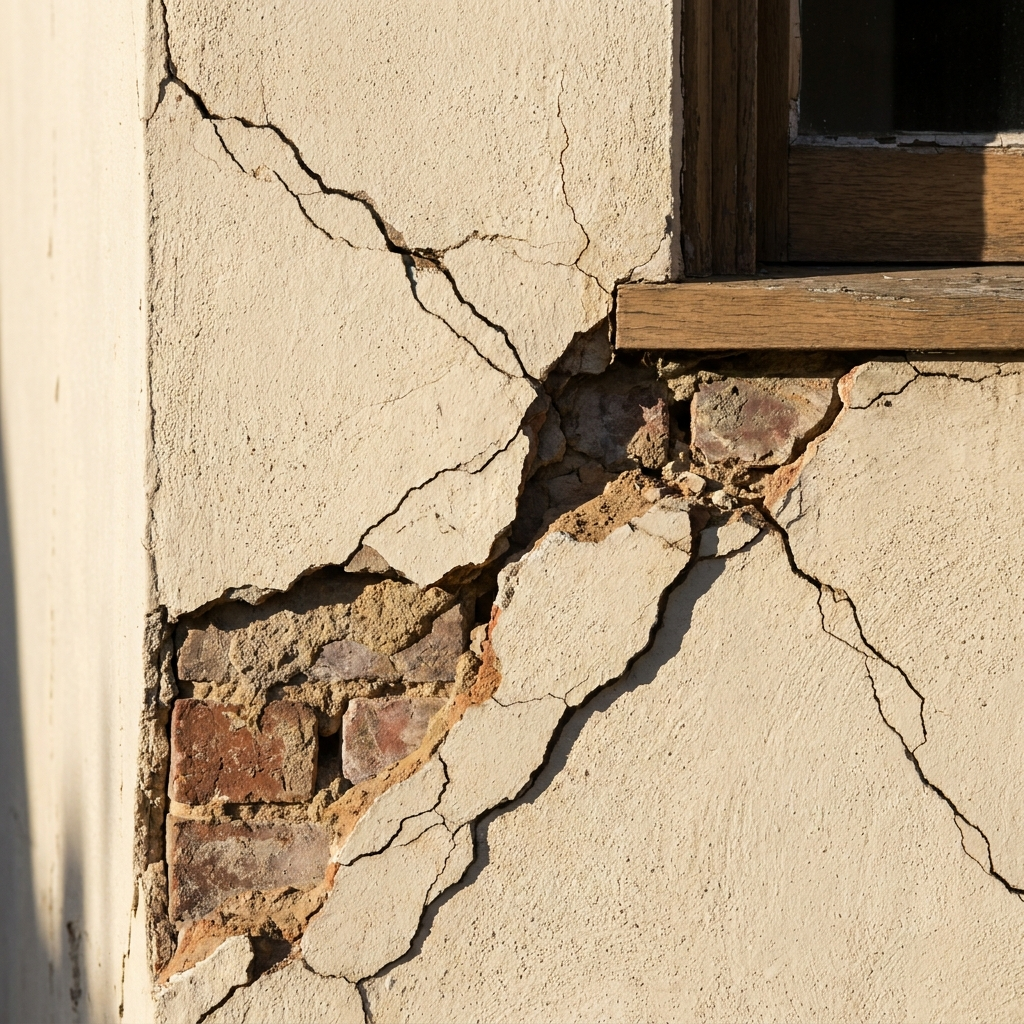
You’ve just received your homebuyer’s survey and, buried in the report, there’s a recommendation to “seek further advice from a structural engineer.” Your stomach drops — and suddenly the purchase you’ve been excited about feels fragile. Take a breath: in most cases, this is a precaution, not a catastrophe, and a structural engineer’s report for house purchase is often quicker and more straightforward to obtain than you might expect.
Key Takeaways
- A surveyor flags concerns; a structural engineer diagnoses the cause and tells you whether it’s actually significant — these are two very different things.
- The majority of cracks flagged in homebuyer surveys turn out to be old, settled movement that poses no ongoing structural risk.
- Many structural engineer reports can be produced desk-based from your survey and photographs alone — no site visit required, which keeps costs down and turnaround fast.
- Speed matters: if a mortgage lender has imposed a retention, getting the right report quickly can be the difference between a purchase completing or collapsing.
- A signed structural engineer’s report gives your lender, solicitor, and insurer something concrete to act on — a verbal reassurance from a builder does not.
Why your survey flagged it in the first place
RICS surveyors — the professionals who carry out Level 2 homebuyer reports and Level 3 building surveys — are trained to identify and flag anything that might be structurally significant. That is exactly what they should do. But their role is observation and risk flagging, not structural diagnosis. When a surveyor writes “cracks noted to rear elevation — recommend further investigation by a structural engineer,” they are doing their job properly. They are not telling you the building is falling down.
The most common triggers I see are diagonal cracking at window or door corners, stepped cracking in brickwork, cracks at a party wall junction, or visible deflection in a lintel. Sometimes it’s a bulge in a wall, or evidence that a chimney breast has been removed without the surveyor being able to confirm adequate support was provided. Occasionally a lender — rather than the surveyor — flags the issue themselves and imposes a mortgage retention until a qualified structural engineer has signed off the property. In every one of these scenarios, the next step is the same: commission a structural engineer’s report.
What a structural engineer’s report actually is — and isn’t
There’s a lot of confusion about this, so let me be direct. A RICS homebuyer survey and a structural engineer’s report are fundamentally different documents produced by different professionals for different purposes.
The surveyor’s report is a broad condition survey of the whole property — roof, drainage, damp, windows, services, and structure. It covers everything at a relatively high level. When the surveyor reaches the limits of their expertise on a specific structural question, they refer you to a specialist. That specialist is me.
A structural engineer’s report focuses on the specific concern raised. I look at the cracking pattern, the location, the building’s age and construction type, any available history, and the photographs. I assess whether the movement is active or historic, whether it has a structural cause or a more benign one (thermal movement and minor settlement account for a very large proportion of what gets flagged), and I state clearly what — if anything — needs to be done about it. The report is signed by a Chartered Engineer, which is what your lender and solicitor need to see.
What the report is not is a repeat of the full building survey. It is a targeted, expert opinion on the structural question at hand.
The reassuring reality about cracking
I want to be honest with you here, because I think it helps to hear it plainly: the majority of cracks I am asked to assess turn out to be historic settlement that has long since stabilised. Old Victorian and Edwardian terraces in West Yorkshire — the kind of stock that makes up a huge proportion of the housing market in towns like Huddersfield, Halifax, and Dewsbury — have had 120-plus years to move, settle, and find equilibrium. Many of the cracks you see in these properties were formed decades ago and have not changed since.
That does not mean every crack is harmless. Active subsidence, inadequate support to a removed chimney breast, a failed lintel, or a wall that is genuinely out of plumb by a significant margin — these are real structural concerns that need addressing. But the point is that you cannot tell which category a crack falls into without engineering assessment. A surveyor cannot tell you. A builder definitely cannot tell you. That assessment is what the structural engineer’s report provides.
When I review a set of crack photographs and a survey extract, I am looking at crack width, pattern, and orientation; which materials are cracking and at which interfaces; whether there is any evidence of recent activity; and what the building’s construction and ground conditions suggest about likely behaviour. All of that analysis can often be done without setting foot on site.
Desk-based reports: faster and lower-cost than you think
This is probably the most practically useful thing I can tell you if you’re in the middle of a purchase. Many structural engineer reports for house purchase can be produced entirely desk-based — meaning I work from your RICS survey, the photographs taken during that survey, and any additional photographs you or your agent can provide. No site visit required.
This matters for two reasons. First, cost: a desk-based report is considerably less expensive than one requiring a site attendance. Second, speed: I can typically turn around a desk-based report in a matter of days rather than weeks. When your mortgage offer has an expiry date, or when a vendor is getting impatient, or when a lender’s retention is holding up a completion, that speed is not a luxury — it is essential.
I will always tell you honestly if the evidence warrants a site visit. Some cases genuinely do — where the crack pattern is ambiguous, where there is suspected active movement, or where the photographs simply don’t capture enough detail for a confident diagnosis. In those cases, an on-site attendance is the right call and I will say so. But many cases do not require it, and there is no point in adding cost and delay when the desk-based evidence is sufficient.
What the report contains and what happens next
A structural engineer’s report in this context will typically set out the specific concern identified in the survey, my assessment of the likely cause, whether I consider the issue to be structurally significant, and — where relevant — a remedial specification or recommendation. That last point matters: if remedial work is required, the report should tell your builder or contractor exactly what is needed, not just that “something should be done.”
Once you have the report, your solicitor can share it with the vendor’s solicitors. If the issue is minor, it may simply satisfy the lender and allow the purchase to proceed. If remedial work is needed, you have a documented specification that can form the basis of a price negotiation or a request that the vendor carries out the work prior to completion. Either way, you are in a much stronger position with a signed engineer’s report than without one.
If your lender has imposed a retention specifically pending a structural report, the report goes to the lender’s valuer or their panel. Again, a signed report from a Chartered Engineer — CEng, MIStructE — is what they are looking for.
When to call a structural engineer
If your homebuyer survey has recommended further structural investigation, or if your mortgage lender has flagged a structural concern and imposed a retention, you need a structural engineer’s report — not a builder’s opinion, not a second viewing, and not a wait-and-see approach. The same applies if you spotted something on your own viewing that concerned you: diagonal cracking, a wall that looks out of plumb, a sagging roofline, or signs that internal walls may have been removed without proper support. The sooner you commission the report, the sooner you have the information you need to make a decision — and the sooner your purchase can move forward.
Need expert eyes on your project?
I am a Chartered Structural Engineer (CEng, MIStructE) based in Huddersfield. The Beam Doctor offers homeowners and builders:
- Steel beam (RSJ) calculations — Eurocode-compliant, Building Control-ready, in 5 working days. See all services and current fees →
- Defect investigation — I attend your property, inspect the cracking or movement, and give you a written opinion on the cause. The site visit is included in the price. See the fee bands →
- Structural Engineer’s Report — a signed desk-based opinion on a single structural concern, for a mortgage lender or an insurance claim. Request a report →
- On-site attendance — a Chartered Engineer at your property, tiered by duration. See site visit fees →
Current fees for every service are listed on the services page.